Longer cycles
Loads consistently need more time or a second cycle to dry.
Dryer vent cleaning
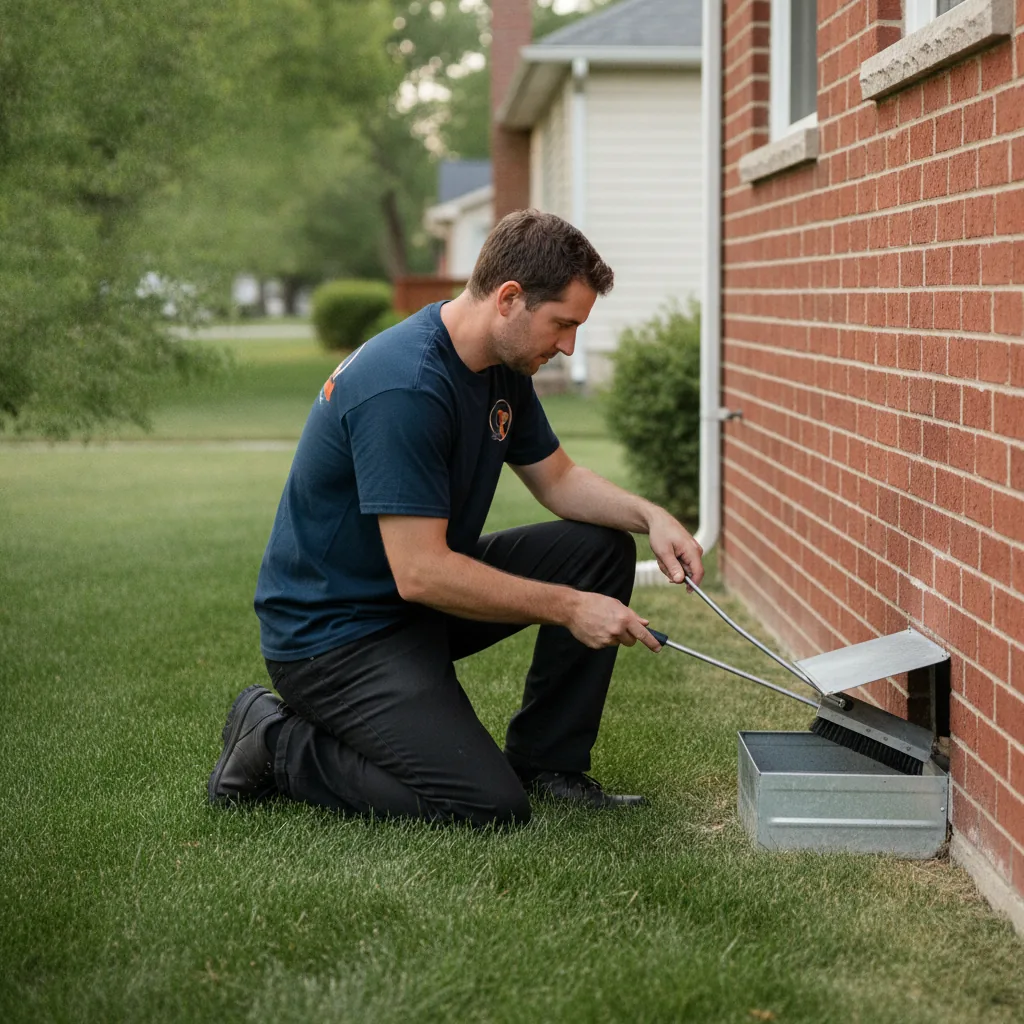
A dryer vent is a focused exhaust system. We scope the route, remove accumulated lint from the accessible path and check the exterior termination—without pretending cleaning can repair damaged venting.
Watch the clues
A single symptom does not diagnose the problem, but these observations can signal that the exhaust path deserves attention.
Loads consistently need more time or a second cycle to dry.
The machine, clothing or laundry area feels hotter than expected.
Lint is collecting around the termination or flap.
The exterior flap barely moves while the dryer runs.
One continuous pathway
Lint can accumulate along straight runs, at elbows, where vent material is crushed and behind a termination that no longer opens freely. A useful service considers the entire accessible route.

A cleaning service with boundaries
Cleaning cannot restore a crushed connector behind the dryer.
A disconnected path needs correction before normal use.
Screened, blocked or damaged terminations can require replacement.
Inaccessible or unusual construction may need further investigation.
Dryer vent FAQ
No. A dryer vent is a dedicated exhaust path that carries heat, moisture and lint from the dryer to an exterior termination. HVAC ducts distribute and return conditioned air throughout the home.
Longer dry cycles, a dryer or laundry room that feels unusually hot, visible lint at the exterior termination, or an exterior flap that does not move normally can justify a closer look. Stop using the dryer and seek qualified help if you smell burning or see scorching.
Not always. Route length, bends, material, access and the exterior termination determine the safest cleaning approach. The path should be scoped before tools are forced through it.
No. Cleaning removes lint; it does not repair a damaged, disconnected or improperly routed exhaust. We identify visible concerns so the correct repair can be planned.
Dryer vent estimate
Floor level, route length, exterior access and symptoms help us understand the job before the visit.